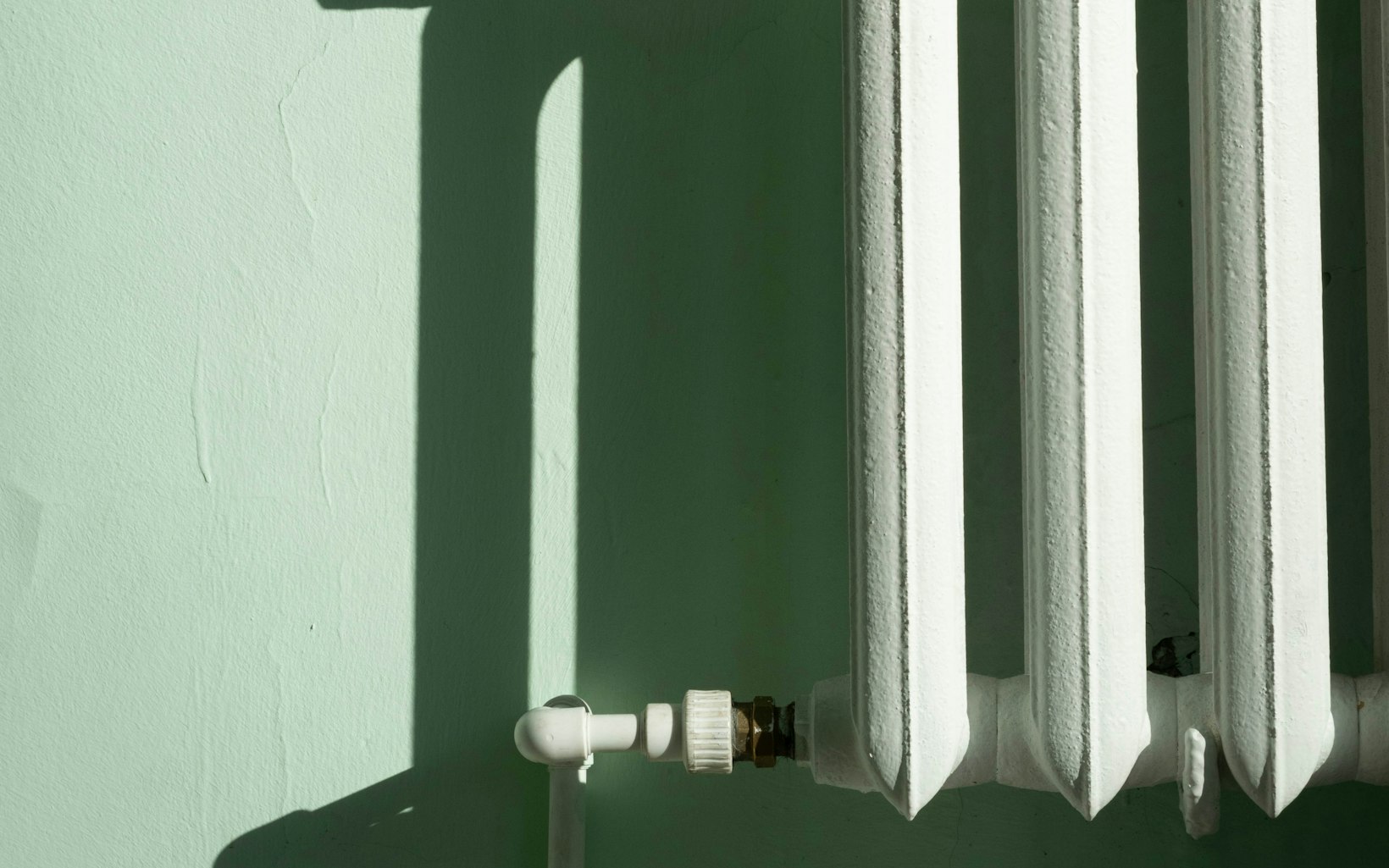
If a radiator is warm at the bottom and cold at the top, there’s air trapped in it. Air rises, water sinks, and the top of the panel stays cold however high you turn the thermostat. Letting the air out takes ten minutes, a radiator key from any hardware store and an old towel. It’s the job we most often get called out for that people can do themselves.
Signs a radiator needs bleeding
- The top third is cold while the bottom is hot.
- You hear gurgling or trickling when the heating comes on.
- One radiator in the house takes much longer to warm up than the rest.
If the whole radiator is cold, top and bottom, bleeding won’t help: the valve may be shut or stuck, which is a different job.
What you need
- A radiator key (about $3; most valves take the same square key, and some newer ones take a flat screwdriver).
- An old towel or rag to catch the drips.
- A small bowl, if the valve is somewhere awkward.
Step by step
- Turn the heating off and let the radiators cool for half an hour. Hot water under pressure is the one thing in this guide that can hurt you.
- Find the bleed valve: a small square nut in a round fitting at one of the top corners.
- Hold the towel under the valve, fit the key and turn it a quarter turn anticlockwise. No more: the valve only needs to crack open.
- You’ll hear a hiss as the air escapes. Keep the key on the valve.
- When water starts to spit out instead of air, turn the key back clockwise until it’s snug. Don’t force it.
- Wipe the valve dry and move to the next radiator. Start with the one furthest from the boiler on the ground floor, then work up.
Topping up the pressure
Bleeding lets a little water out of the system, so check the pressure gauge on the boiler when you’ve finished. Most sealed systems want between 1 and 1.5 bar with the heating off. If it reads under 1, top it up with the filling loop the way the boiler’s manual shows, then switch the heating back on.
If it doesn’t work
Still cold at the top after a good bleed? The valve may be blocked with sludge, or the system needs balancing so every radiator gets its share of hot water. If the radiator fills with air again within a week, something is letting air in. Those are 30-minute jobs for us, and the price goes on the sheet first.
How often
Once a year, in the autumn, before you need the heating every day. Do every radiator in the house in one go: it takes about as long as a cup of coffee.