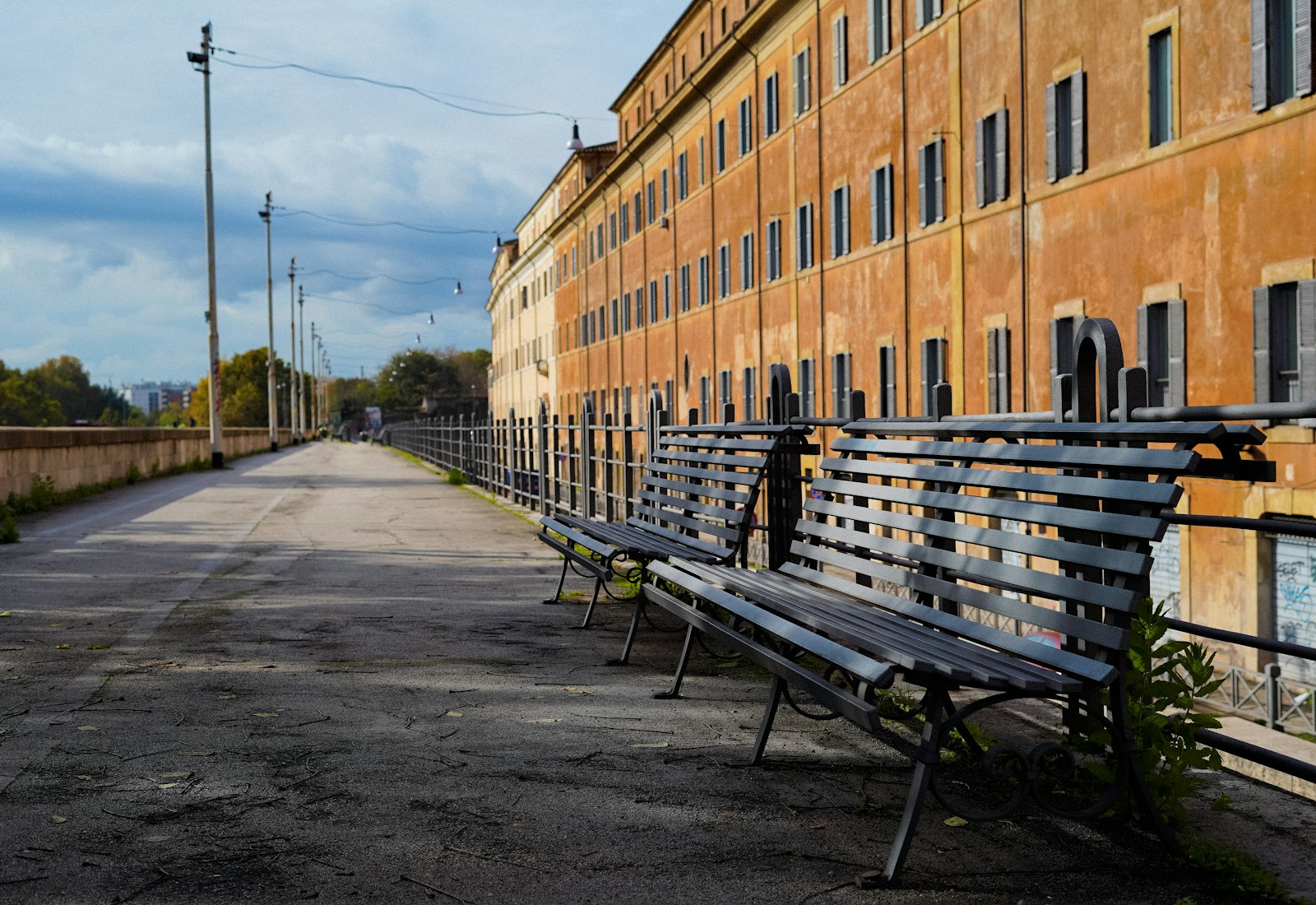
Walk the riverside promenade from the old customs house to the rail bridge and you will pass forty-one benches. Walk the shopping street that runs parallel to it, the same distance, and you will pass two. Neither number is an accident.
Who a bench is for
A bench says: you may stay here. It is the cheapest piece of public hospitality a city can offer, and the most argued about. Older people need somewhere to rest every two hundred metres or they stop walking to the shops. Parents need somewhere to feed a baby. Shop owners worry about people staying too long.
The two benches on the shopping street both have three armrests, so nobody can lie down on them. The forty-one on the promenade have none. They were installed in different decades, by different departments, with different ideas of who the public is.
A street without a bench is a street that wants you to keep moving.
Ines, who runs the residents’ association by the river
The slat question
Bench design is full of quiet decisions. Slats instead of a solid seat drain the rain, but are cold in winter. A backrest helps older people stand up again. A seat at forty-five centimetres suits most knees; the fashionable low benches of the last decade suit almost nobody over sixty.
What I would ask for
One bench every two hundred metres on every shopping street, with a backrest and an armrest at each end, nothing in the middle. It is not a radical request. It is roughly what the city had in 1960.
Until Tuesday,
Rafael